
Why small, informal communities matter more than we think
If you’re reading this, there’s a good chance you know what it feels like to work in isolation, even when you’re surrounded by people.
I first became aware of this years ago while working in large corporate organisations. I was in an Global HR & Environment, Health & Safety department and PMO role, deeply involved in projects, governance and change. On paper, I was part of a big system. In reality, I often felt surprisingly alone.
What struck me over time was that this wasn’t just my experience.
Across divisions, functions, and buildings, there were other PMOs, project managers and change professionals sitting in their own silos, grappling with similar questions, facing comparable pressures from the business and reinventing solutions in parallel. Often, they didn’t even know a counterpart existed in other divisions and departments.
Reaching beyond your immediate “trusted circle”, takes courage and time. It’s easier to stay where things feel familiar. And yet, again and again, I saw how many of us were working in quiet isolation, unaware that someone nearby was wrestling with the same challenges or doubts.
When we did connect, something shifted.
Conversations moved quickly beyond tools and frameworks to the human reality of the work. People shared what was actually hard. What they were unsure about. What had worked and what hadn’t. There was relief in being seen. Energy in exchanging honestly. And a quiet sense of “ah… it’s not just me.”
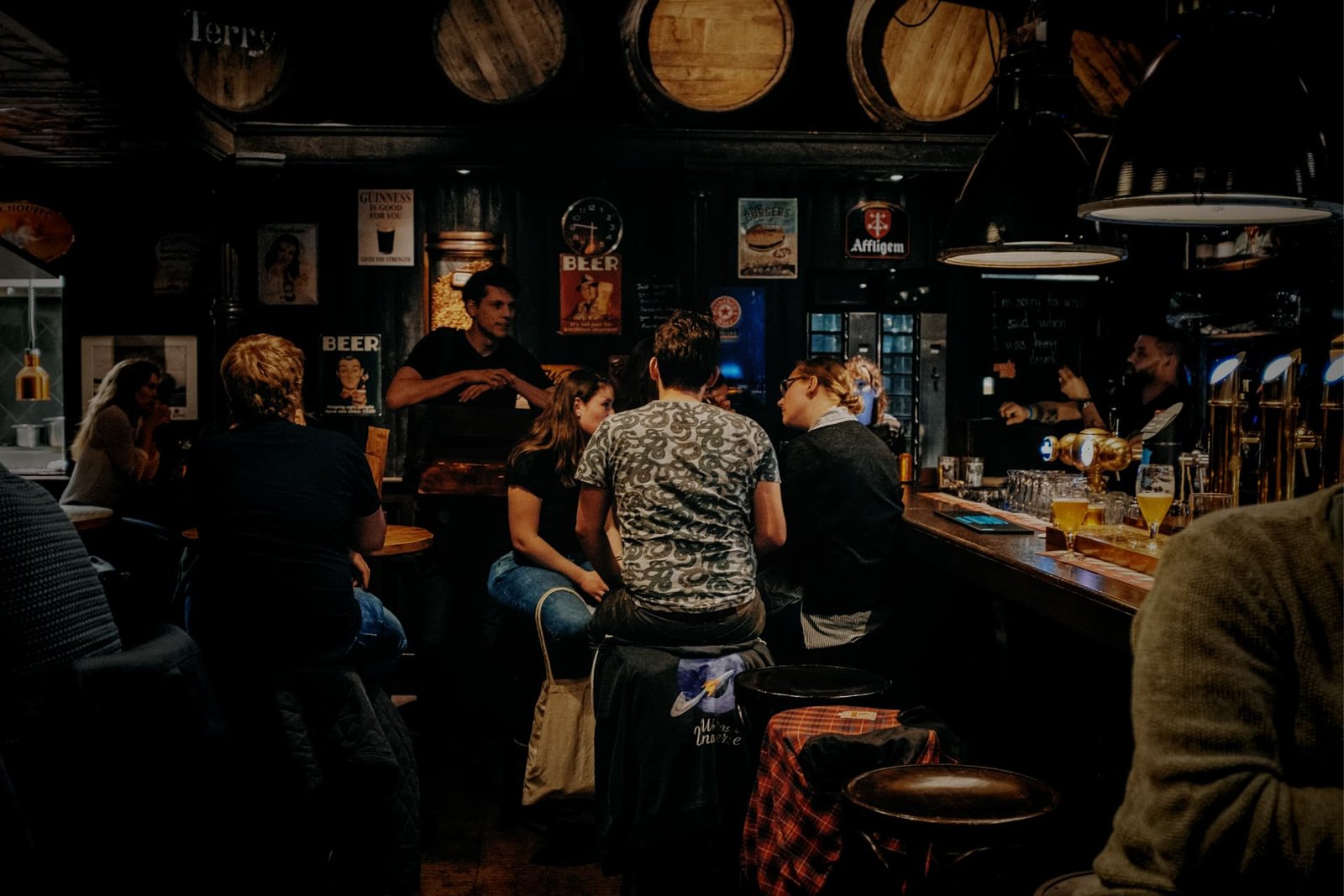
Two years ago, after leaving the corporate world, I found myself alone again and this time at home. Strategising, researching, designing, and planning the next chapter of my work. I valued the freedom, but I also recognised that familiar absence of shared thinking and connection.
That’s when I remembered the energy I had always drawn from community.
Not networking.
Not formal programmes.
But spaces where people could exchange: openly, thoughtfully and without needing to perform.
That’s where Impact Exchange was born.
Impact Exchange started as a simple experiment:
What if a small, informal group of people came together, not because they shared the same job title, but because they shared a desire to make an impact? In their work, in their lives, and in the world around them.
Entrepreneurs, coaches, project managers, facilitators: people with different backgrounds, each exploring their own contribution. No fixed curriculum. No pressure to have answers. Just a shared willingness to connect and exchange on topics that genuinely mattered to them.
What helped me hold this community was my own experience as a member of the School for Duck Whisperers, created and led by Scott Poynton. Being part of that space showed me, from the inside, how much care, presence and a non-judgmental environment matter.
A community, I’ve learned, isn’t something to be driven, it’s something to be tended, like a garden. You create the conditions. You pay attention, listen and welcome. And those who feel open and ready can step in and experience what it’s like to be seen for who they are.
As Scott says himself:
“In my experience, meaningful change only begins after people step out of the public arena and into a space where they can slow down and be honest.”
That way of holding space has deeply influenced how I approach Impact Exchange, and how I show up in my work as a coach — less about directing, more about tending.
Over time, another layer naturally emerged.
Through Impact Exchange, I began collaborating with Gabriela Bedinelli, an entrepreneur deeply passionate about human connection, meaning, and diverse cultures. We met at the Inner Development Goals – Forum in Caux, and connected around a shared curiosity: how do we really understand what creates belonging, meaning, and authentic connection in groups?
Through her work on Collective Meaning and through many conversations, we’ve been exploring how we might translate these insights into practice. Together, we’re developing the Collective Meaning Assessment (CMA), a diagnostic tool that looks at the quality of connections and the state of collective meaning within groups and communities.
Impact Exchange has become a living space where we can try things out. A place to sense what is alive in a group, where trust is forming, and where it may need more care. The aim isn’t measurement for its own sake, but learning how we might help other communities, teams, and organisations cultivate stronger belonging, clearer meaning, and more authentic human connection — not as abstract ideas, but as lived experience.
When I look at Impact Exchange today, what stands out is not what we produce, but what happens between people.
In shared moments.
In listening without fixing.
In stories of small wins, real struggles, and half-formed dreams.
When people feel safe enough to show up without needing to be impressive or certain, a fine, almost invisible thread begins to form. Over time, those threads weave into trust. And trust slowly becomes relationship.
And I can say that many times after our sessions I did not have an clear answer to my question or challenge I shared with the group, but I did leave with orientation — a clearer sense of what mattered to me and how I wanted to move forward.
For me, that’s what Impact Exchange has become and perhaps it’s what many people are quietly looking for when they feel drawn to a community: not direction, but connection. Not certainty, but companionship along the way.




A question for you
I’m curious:
What community are you currently part of, or feeling drawn to join? It could be an online space, a team, a club, a reading circle or a local initiative. And what does being part of that community give back to you?
If this resonates and you’d like to know more about Impact Exchange, feel free to reach out. It’s a small, informal community shaped together over the past two years. There’s no website for it. You’re welcome to contact me via LinkedIn DM, or book a conversation via my website.
I’d love to continue the exchange, here & beyond.